
BACKGROUND
Adolescence is now understood as a pivotal developmental phase marked by profound physical, emotional, and social transformations that shape attitudes and behaviors with enduring consequences for adult life (Sawyer et al., 2018). Contemporary perspectives extend the boundaries of adolescence, highlighting its heterogeneity and the effects of new social realities such as globalization and digital connectedness (Patton et al., 2016). Since Hall (1904) first conceptualized adolescence as a distinct developmental stage, subsequent research has deepened the understanding of its multidimensional nature, encompassing biological, cognitive, and sociocultural aspects (Steinberg & Morris, 2001; Steinberg, 2009, 2010). Recent empirical evidence further demonstrates that adolescence is a universal period characterized by heightened sensation seeking and immature self-regulation across cultures (Steinberg et al., 2018). Moreover, focal theories emphasize that the transition to adulthood involves distancing from family, increased influence from peers, and engagement with new significant social figures beyond the home environment (Coleman, 1961).
During this period, the social environment, including family, peers, and school, as well as early affective bonds, plays a crucial role in shaping both identity and personality. Several studies have shown that high-quality relationships with parents, friends, and other adults significantly influence areas such as confidence, competence, character, and emotional well-being throughout adolescence (Xu, 2023).
The construction of identity in adolescence, as analyzed by Crocetti (2017) and Marcia (1980), is a complex and ongoing process during which young people face numerous biological, cognitive, and social changes. Marcia emphasized that this process influences self-perception, relationships with others, and the capacity to cope with challenges. Adolescents with a less defined identity may display greater insecurity and tend to require external guidance.
Simultaneously, this stage is marked by significant challenges related to health, family dynamics, and the social and academic environment. The development of self-esteem and self-image becomes central, accompanied by emotions such as frustration, stress, or depression. Identified risk factors, including substance use, unintended pregnancies, violence, accidents, and family conflicts, can be exacerbated by low self-esteem and the egocentrism typical of this developmental period (Espinoza et al., 2022).
Within this context, engagement in physical and sports activities emerges as an essential component. Numerous studies have reaffirmed the importance of sports for physical, emotional, and social well-being during adolescence. However, recent data reveal that approximately 81% of adolescents worldwide fail to meet the recommended levels of physical activity (World Health Organization, 2024), highlighting an urgent global health concern. Systematic participation helps prevent and manage obesity, whereas sedentary lifestyles are associated with increased rates of chronic diseases, a particularly concerning trend among children and adolescents. The World Health Organization recommends regular physical activity as a key measure for comprehensive health (Bull et al., 2020).
Multiple systematic reviews have confirmed that regular sports participation improves the physical, psychological, and social well-being of children and adolescents, enhancing self-esteem, quality of life, and social connectedness (Eime et al., 2013). Furthermore, recent evidence suggests that these benefits extend to children and adolescents with chronic conditions, for whom sport-based interventions improve physical competence and psychosocial outcomes (Sañudo et al., 2024).
Conversely, sedentary behaviors, including excessive screen time, are linked to higher risks of obesity, metabolic dysfunction, and psychological problems in youth, as well as delays in cognitive development and poorer academic performance (Wyszyńska et al., 2020; Wu et al., 2017). Consequently, current WHO guidelines prescribe at least 60 minutes per day of moderate-to-vigorous physical activity for children and adolescents as a foundation for physical, mental, and cognitive health.
Additionally, international guidelines such as those published by the National Health Service (NHS, 2024) reinforce these recommendations by emphasizing the necessity of policies and educational programs that promote more active lifestyles from childhood.
From a psychological perspective, adolescent obesity is closely linked to low self-esteem, depression, and anxiety, with these difficulties often intensified by social stigmatization and weight-based prejudice (Biddle et al., 2017). Such psychosocial factors undermine motivation and self-efficacy, negatively impacting personality development and serving as substantial barriers to participation in physical and social activities, as well as to the pursuit and achievement of personal goals.
PERSONALITY AND MOTIVATION
The concept of personality has been explored by numerous authors and theoretical models. From the perspective of trait psychology, personality is understood as the sum of relatively stable and consistent behavioral tendencies (Torreblanca Murillo, 2017). Among the principal structural models, those developed by Eysenck (1964), Cattell (1995), and particularly the Five-Factor Model, commonly known as the Big Five, are notable for their empirical foundation and broad influence (Goldberg, 1990, 1992; Costa & McCrae, 1992). The Big Five, originating from a lexical approach that analyzes adjectives in natural language and widely accepted in the scientific community, delineates five universal dimensions: Openness to experience (imagination and mental flexibility), Conscientiousness (organization and self-control), Extra-version (activity and sociability), Agreeableness (empathy and friendliness), and Neuroticism (propensity toward negative emotions), collectively represented by the acronym OCEAN.
In the sports domain, research on personality has gained prominence by identifying distinctive patterns among athletes and their associations with performance (García-Naveira & Ruiz-Barquín, 2013). However, the literature differentiates between skeptical perspectives, which report no significant personality differences between athletes and non-athletes (Giacobbi et al., 2005), and credulous positions that identify specific personality traits linked to athletic involvement. While a broad consensus exists regarding the relevance of the Big Five domains, debate continues concerning the nature and influence of personality subdimensions and their precise role in sporting achievement (Torreblanca Murillo, 2017).
A recent analysis by Shuai et al. (2023) synthesized evidence from 23 studies analyzing the influence of the Five-Factor Model personality traits on sports performance across various competitive levels and sports disciplines. Their findings indicate that conscientiousness and extraversion are consistently associated with better sports performance. Conscientiousness appears to support consistent training habits, discipline, and goal-directed behaviors, while extraversion facilitates motivation, social interaction, and effective teamwork. However, these relationships are not absolute and may vary depending on the specific sport and level of competition. This highlights the ongoing relevance of the Five-Factor Model as a framework for understanding athlete personality profiles but also underscores the need for more nuanced research into how different personality subdimensions interact and influence performance outcomes in diverse sporting contexts.
Motivation, defined as the set of internal and external factors that drive individuals to act toward goals and personal satisfaction, is of special interest in psychological and sports research. Mesurado (2008) describes motivation as the force that directs behavior, which can originate from psychological impulses or environmental stimuli. The intensity of motivation depends on the subjective importance assigned to the stimulus rather than its objective value, emphasizing the role of individual perception in motivational arousal (Triglia et al., 2018).
In the context of sports, the self-determination theory developed by Ryan and Deci (2000, 2017, 2020) has been instrumental in differentiating various types and degrees of motivation, particularly intrinsic motivation (engagement for inherent satisfaction or interest), extrinsic motivation (driven by external rewards, recognition, or pressure), and amotivation (lack of intention). It is important to clarify that motivational orientation, as conceptualized by Ryan and Deci, refers to the underlying reasons or drivers behind individuals’ engagement in sports activities. This orientation significantly influences athletes’ commitment and adherence to sports (Murcia et al., 2007).
Separately, goal orientation refers to the standards or criteria athletes use to define success in sport, which are conceptualized as task orientation (focusing on personal improvement and mastery) and ego orientation (focusing on outperforming others) (Nicholls, 1989; Stavrou et al., 2015). These two frameworks, while related, examine different psychological facets and should be analyzed independently to avoid tautological interpretations.
Numerous studies support the critical role of satisfying basic psychological needs in maintaining motivation among young athletes. For example, Gallant et al. (2024) found that perceived competence during adolescence was positively associated with sustained high levels of physical activity, underscoring the importance of these factors for athletic development and persistence in this critical stage. Additionally, recent research emphasizes the significance of psychological resilience, demonstrating that its development enhances adolescents’ commitment to sports primarily through its positive effect on motivation. This evidence highlights the necessity for comprehensive interventions that address both psychological needs and resilience in order to promote long-term participation and optimize physical and mental well-being (He et al., 2025).
Intrinsic motivation, defined as the inclination to engage in activities for the inherent satisfaction and enjoyment they provide rather than for external rewards, plays a fundamental role in adolescents’ cognitive, social, and physical development. Multiple studies have demonstrated that intrinsic motivation enhances the acquisition of learning strategies, task performance, positive affective experiences, as well as greater life satisfaction and innovative performance in adulthood (Gnambs & Hanfstingl, 2016; Hammond et al., 2011). However, research also points out that intrinsic motivation tends to decline throughout childhood and adolescence, an effect well documented in both cross-sectional and longitudinal studies (Gnambs & Hanfstingl, 2016).
Conversely, identification with the athletic role and motivation appear to be closely intertwined in adolescent athletes. Recent research suggests that maintaining a balanced identity between athletic and academic domains fosters better psychosocial adaptation and helps prevent identity foreclosure, thereby increasing the likelihood of success in both educational and sporting contexts (Niehues et al., 2025).
The decline in intrinsic motivation is partly attributable to the levels of autonomy, competence, and social relatedness that adolescents perceive. Notably, autonomy, defined as the capacity to make decisions and experience choice, has been recognized as a crucial factor. In educational settings, practices such as providing students with meaningful choices and conveying the value of tasks have been shown to effectively foster autonomy, thus enhancing intrinsic motivation (Patall et al., 2010).
Most daily activities are extrinsically motivated; that is, they are performed for external outcomes rather than for the inherent enjoyment of the activity itself (Deci & Ryan, 2000). Within the domain of sport, extrinsic motivation is expressed through a continuum of regulatory styles, including external, introjected, and integrated regulation, each exerting a significant influence on athletes’ engagement, performance, and persistence in physical activity. This complexity has been thoroughly documented with tools such as the revised Sport Motivation Scale (SMS-II), which offers nuanced measurement of motivational regulation and demonstrates how extrinsic motivation affects both adherence and performance in adolescent sport participation (Pelletier et al., 2013).
Understanding the interaction between motivation and personality within the context of adolescent sport is fundamental for educators, families, and professionals because it offers practical strategies to promote physical activity, holistic well-being, and, consequently, reduce school dropout rates during this critical period (Hope et al., 2019). Such understanding facilitates the development of comprehensive educational programs tailored to the motivational and personality profiles of adolescents (Deng et al., 2023), supporting the achievement of key Sustainable Development Goals, namely those related to health and well-being and quality education (United Nations, 2023).
Research into the roles of motivation and personality in adolescent sports participation is justified by their proven importance in promoting physical health, as well as emotional and social well-being (Giacobbi et al., 2005). Although numerous studies have addressed the connections between these factors and participation in physical activity, it is still necessary to clarify their specific interaction during adolescence (García-Naveira & Ruiz-Barquín, 2013; Matus et al., 2020). Elucidating the elements that encourage sports participation in this age group will allow us to design more effective strategies to establish active and healthy lifestyles at a crucial stage of development. In addition, such an understanding can help prevent the perpetuation of myths or biases within educational communities, as frequently observed in discourses around nutrition and healthy habits (Moreno-Rodríguez et al., 2021).
It should be noted that this study employs a correlational and cross-sectional design, which primarily aims to identify and analyze associations between variables. According to Lau (2017), correlational research investigates relationships between variables without manipulating any of them, and it is limited in its capacity to infer causality (Maxwell & Cole, 2007; Shadish et al., 2002). Therefore, while motivation and personality show significant associations with adolescents’ participation in physical activity, these findings do not imply a causal impact of one on the other. Instead, they highlight important relationships that can inform future longitudinal and experimental studies aimed at establishing causal mechanisms.
This perspective gains particular importance in light of recent evidence. De Almeida and Noll (2024) reported that most adolescents fail to meet the minimum recommendations for daily physical activity, underscoring the urgent need for coordinated interventions at the school, family, and community levels to address this issue and foster enduring healthy behaviors. Similarly, San Martín González et al. (2025) demonstrated that motivation toward physical education is closely linked to both adherence to the Mediterranean diet and the regular practice of physical activity. Their research further indicated that interdisciplinary educational programs enhance intrinsic motivation as well as the adoption of healthy lifestyle habits among adolescents. Lastly, Ahmed et al. (2023) provided evidence from a randomized controlled trial showing that a multicomponent school-based physical activity intervention can significantly reduce depressive symptoms and increase life satisfaction in adolescents, highlighting the essential role of school-based programs in promoting mental health and holistic well-being.
In this context, Díaz-Rodríguez and Pérez-Córdoba (2024) investigated the influence of personality and general intelligence variables on the improvement and creativity of tactical decisions in young basketball players. Their study demonstrated that intelligence facilitates tactical perception, while high levels of psychoticism combined with intelligence predict more innovative tactical solutions. These findings highlight the importance of considering individual differences in intelligence and personality to enhance decision-making and creativity in sport.
AIM OF THE STUDY
The main objective of this study was to analyze the relationship between motivation, personality, and adolescents’ participation in physical-sporting activities. Additionally, the study sought to examine specific aspects related to motivation, personality traits, and gender differences within this context. In line with the correlational and cross-sectional nature of the research, the following research objectives were set:
Investigate the relationship between intrinsic and extrinsic motivation and sports participation among adolescents.
Compare potential gender differences in personality traits and motivation levels within the sample.
Identify which personality factors influence young people’s predisposition to engage in sports.
Examine personality traits in individuals exhibiting high levels of sports motivation.
Determine which personality factors influence adolescents’ predisposition to sport, in order to support the school’s development of educational and tutorial action plans.
PARTICIPANTS AND PROCEDURE
PARTICIPANTS
The sample consisted of 88 students, 53 males and 35 females, enrolled in the second year of secondary education at a semi-private, state-subsidized school in Madrid, Spain. The school provides education from early childhood through high school and is recognized as one of the leading semi-private institutions in the region. The student body mainly comes from middle- to upper-middle-class socioeconomic backgrounds.
Participants were recruited through non-probabilistic convenience sampling, a method commonly used in exploratory correlational studies within educational contexts. The inclusion criteria were current enrollment in the target grade and consent to participate, while the exclusion criterion was any physical or cognitive impairment that could interfere with sports participation or questionnaire completion.
All participants and their legal guardians provided informed consent prior to data collection, under protocols approved by the school administration and institutional ethics committee.
MEASURES
This study employed two well-established questionnaires to assess sports motivation and personality traits in adolescents, selected based on their demonstrated validity and reliability in prior research.
Sport Motivation Scale (SMS/EMD; Pelletier et al., 1995, 2013): The SMS/EMD comprises 28 items divided into seven subscales evaluating three types of intrinsic motivation (motivation to know, to experience stimulation, and to accomplish things) alongside various forms of extrinsic motivation, including identified, introjected, and external regulation, as well as amotivation. Each item is rated on a seven-point Likert scale ranging from 1 (does not correspond to me at all) to 7 (corresponds exactly to me).
Brief Personality Questionnaire (CBP): The CBP is a concise, 20-item instrument completed via a five-point response format. It is an effective and reliable tool for assessing adolescent personality traits due to its brevity and capacity to measure pertinent personality facets (Torreblanca Murillo, 2017). Extraversion was measured using the Brief Personality Questionnaire, a validated instrument that assesses personality traits independently from physical activity levels, thereby avoiding tautological associations in our analysis. The CBP measures the Big Five personality factors along with two associated subdimensions for each: Sociability and Salience for Factor I; Empathy and Warmth for Factor II; Speed and Order for Factor III; Anxiety and Depression for Factor IV; and Openness and Intellect for Factor V. Regarding Factor IV, anxiety is conceptualized as a state of heightened physiological arousal combined with apprehension and mood disturbance, which has been widely studied in adolescent development and sports psychology (Barlow, 2002; Spielberger, 2010). This construct captures emotional instability and susceptibility to stress, providing a more nuanced understanding of psychological factors influencing sports participation, distinct from older, less precise notions of overarousal.
PROCEDURE
After selecting the sample for this study, approval was obtained from both the school principal and the students’ parents through informed consent. Subsequently, a questionnaire was created using the Microsoft Forms platform. This questionnaire included items from the SMS and the CBP, along with several sociodemographic questions.
Following coordination of a suitable date and time, the questionnaires were administered in person at the school. Prior to completion, students received a detailed explanation and justification of the questionnaire’s purpose. They were also informed that any questions or concerns could be addressed individually by raising their hand.
To facilitate data collection, tablets provided by the school were used by the students, ensuring an efficient and standardized response process under supervision. Once data collection was completed, the responses were exported from Microsoft Forms into a database and then imported into SPSS for data cleaning and statistical analysis.
A cross-sectional study design was adopted to investigate the relationships between sports motivation, personality traits, and sports participation among adolescents in the second and third years of secondary education. This approach enabled the collection of data at a single point in time, providing an accurate snapshot of the variables under investigation.
A quantitative methodology was employed, using statistical techniques to rigorously analyze the collected data and ensure an objective assessment of the results.
Data analyses were performed using SPSS, which offers advanced statistical functions for efficient data management and exploration of variable relationships.
RESULTS
This section presents and analyzes the data obtained through the administration of the personality questionnaire and the sport motivation scale, with a focus on identifying patterns, relationships, and significant trends among the studied variables.
Following Alimentum (2011), individuals performing 0 to 2 hours of physical activity per week were classified as sedentary, while those engaging in 3 or more hours were considered active. According to this criterion, 84% of the sample (74 participants) performed three or more hours of physical activity per week, whereas only 16% (14 participants) engaged in two or fewer hours.
Figure 1 displays the distribution of weekly physical activity hours by gender. Among those who reported only one hour of activity per week, all were female (2 participants). For those performing two hours weekly, the majority were female (9), compared to 3 males. In contrast, the highest activity level (> 3 hours per week) was observed in males, with 43 participants, compared to 11 females, indicating a greater proportion of highly active males in this sample.
To examine the relationship between sedentary behavior and gender, a chi-square test was applied. The null hypothesis (“There is no statistically significant relationship between sedentary behavior and gender”) was rejected (χ2 = 10.46, p < .001), indicating a significant association between gender and physical activity levels.
The motivation of each participant with respect to sports practice was assessed using the three domains of the SMS: intrinsic motivation, extrinsic motivation, and amotivation (Balaguer et al., 2007; Pelletier et al., 1995).
To determine the intrinsic motivation score, three subscales were summed: intrinsic motivation to know, measured by items such as “for the satisfaction (enjoyment) I feel while learning techniques and/or skills I have not performed before,” which yielded a mean score of 5.49, indicating a high level. The second subscale, intrinsic motivation to experience stimulation, includes items such as “because I like the feeling of being completely absorbed in my sport,” for which participants reported a mean score of 5.53 – considerably high on a scale of 1 to 7. The third subscale, intrinsic motivation to accomplish things, consists of items such as “for the satisfaction I experience while perfecting my skills,” with an average score of 5.31 across all participants.
The total intrinsic motivation score is obtained by summing these three subscales. In our sample, the mean intrinsic motivation score was 64 (SD = 16.9), with a minimum of 12 and a maximum of 84.
Figure 1
Weekly hours of physical activity by gender
Note. Bars represent the number of female and male participants for each weekly hour category. The category “> 3 hours” refers to participants reporting more than three hours of physical activity per week. Data labels indicate the number of individuals per group.
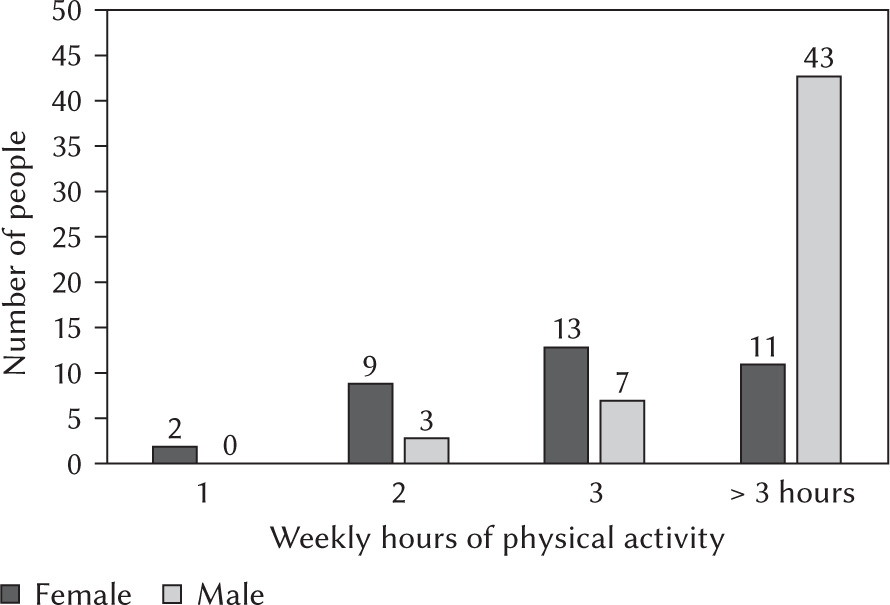
Figure 2
Distribution of intrinsic motivation scores by gender
Note. Bars represent the number of female and male participants in each intrinsic motivation score range. The category “72-84” indicates extremely high intrinsic motivation. Data labels display the number of individuals in each group.
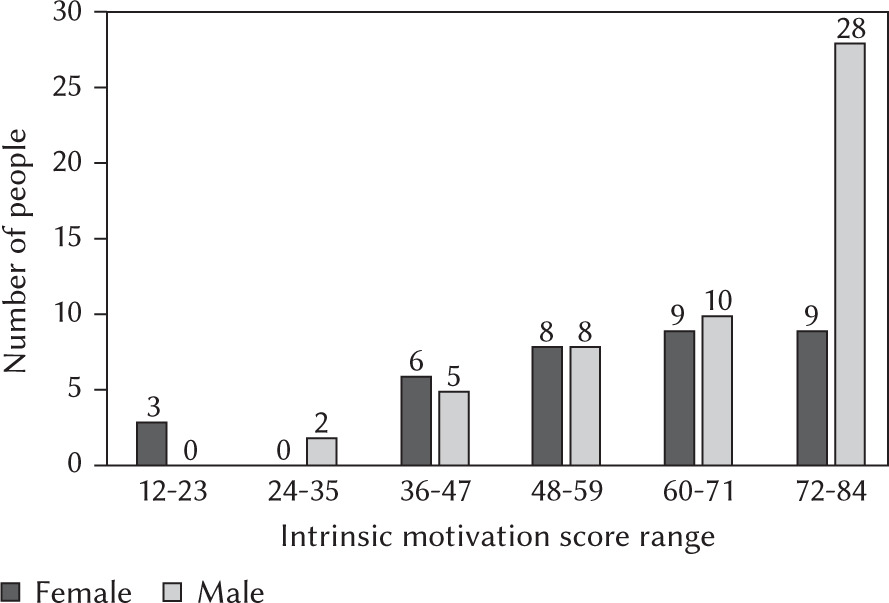
Figure 2 presents the distribution of intrinsic motivation scores by gender. Most participants, both males and females, demonstrated moderately high intrinsic motivation levels. However, a significantly greater number of males (n = 28) achieved extremely high scores in the top category (72-84 points), compared to females (n = 9).
Extrinsic motivation consists of three different subscales. The first is identified regulation, measured by items such as “because it is one of the best ways to maintain good relationships with my friends,” with a mean score of 4.63. The second, introjected regulation, includes items like “because I would feel bad about myself if I did not participate,” with a mean score of 3.51. The third subscale, external regulation, is reflected in items such as “to show others how good I am at my sport,” with a mean score of 3.25. Together, these subscales form the extrinsic motivation construct, which had an overall mean score of 50 (SD = 15.53), with scores ranging from 18 to 82.
Figure 3 presents extrinsic motivation scores by gender. The results indicate that more males achieved high and very high extrinsic motivation scores (n = 17 and n = 7, respectively), while among females no participant reached very high scores and only six displayed high extrinsic motivation.
The final factor of the Sport Motivation Scale is amotivation, which, unlike the other factors, does not include subscales. It is assessed by summing several items, such as “I don’t know: I feel that I am not capable of succeeding in this sport,” which had a mean score of 2.83. Overall, the mean score for amotivation was 13 (SD = 5.33), with a minimum of 5 and a maximum of 28.
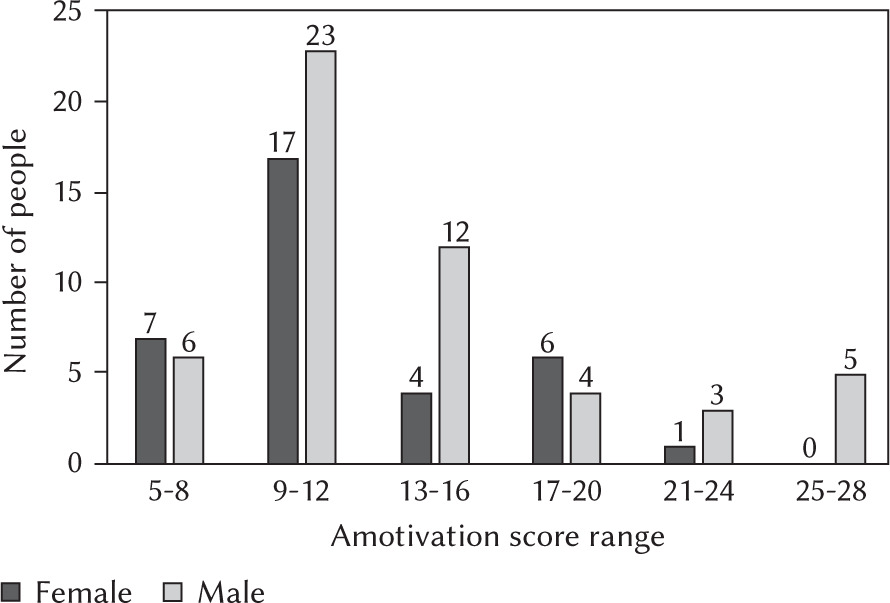
As shown in Figure 4, most participants reported relatively low levels of amotivation, with 17 females and 23 males scoring between 9 and 12. Notably, more males (n = 5) attained high amotivation scores, whereas no females fell into this category.
The correlation coefficient test was applied to examine the relationships among the three factors of the Sport Motivation Scale (SMS). First, the test revealed a moderate, positive correlation between intrinsic and extrinsic motivation (r = .63), indicating that increases in one are associated with increases in the other. In contrast, the correlations between amotivation and either intrinsic (r = .04) or extrinsic motivation (r = .10) were negligible, suggesting that amotivation is largely distinct from intrinsic and extrinsic motivation.
For the assessment of personality traits, Table 1 presents the correlation matrix derived from the Brief Personality Questionnaire (CBP). Notably, neuroticism correlated negatively with the other domains – extraversion, agreeableness, conscientiousness, and openness to experience – all with intercorrelations below 0.3. The remaining traits showed moderate to good convergent correlations, such as those between openness, extraversion, agreeableness, and conscientiousness. Among these, conscientiousness had a relatively low correlation with extraversion (r = .08).
Significant differences were observed in the Brief Personality Questionnaire (CBP) domains by participant gender, with the largest variation found in neuroticism. As shown in Figure 5, men tend to have lower neuroticism scores than women. Specifically, over 62% of men fall within the mid-to-low neuroticism range (scores 4-7), while women show greater variability in their scores: 9% obtain high neuroticism values (12-16), and 17% score low (0-3). These results indicate a wider dispersion in neuroticism among women compared to men.
Figure 3
Distribution of extrinsic motivation scores by gender
Note. Bars represent the number of female and male participants in each extrinsic motivation score range. The category “72-84” indicates very high extrinsic motivation. Data labels show the number of individuals in each group.
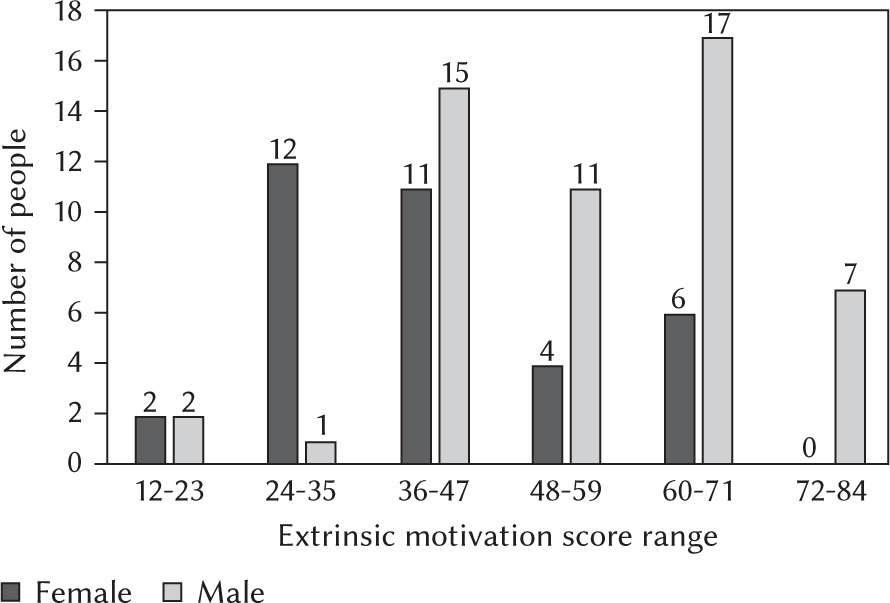
Figure 4
Distribution of amotivation scores by gender
Note. Bars represent the number of female and male participants within each amotivation score range. The score ranges indicate increasing levels of amotivation. Data labels show the number of individuals in each group.
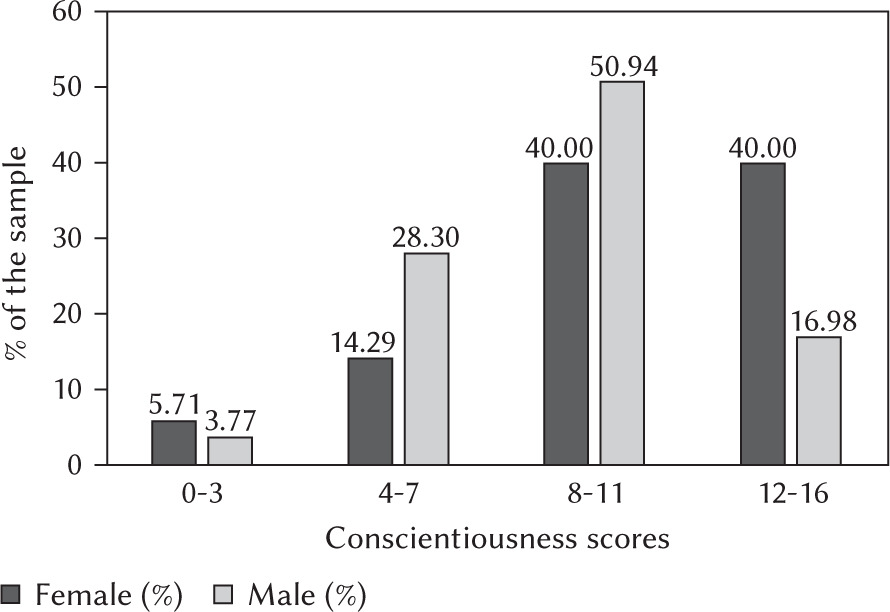
Significant differences were also observed in the facet of conscientiousness, as shown in Figure 6. Among female participants, 40% attained high scores (12-16), compared to only 17% of males. Additionally, 28.3% of males exhibited mid-to-low levels of conscientiousness (scores 4-7), versus 14.29% of females.
Table 1
Correlation matrix of the Brief Personality Questionnaire (CBP)
| Extraversion | Agreeableness | Conscientiousness | Neuroticism | Openness | |
|---|---|---|---|---|---|
| Extraversion | 1 | ||||
| Agreeableness | .20 | 1 | |||
| Conscientiousness | .08 | .25 | 1 | ||
| Neuroticism | –.19 | –.02 | –.27 | 1 | |
| Openness | .21 | .13 | .22 | –.34 | 1 |
Figure 5
Distribution of neuroticism scores by gender
Note. Bars represent the percentage of female and male participants within each neuroticism score range. The score ranges indicate increasing levels of neuroticism. Data labels show the percentage of individuals in each group.
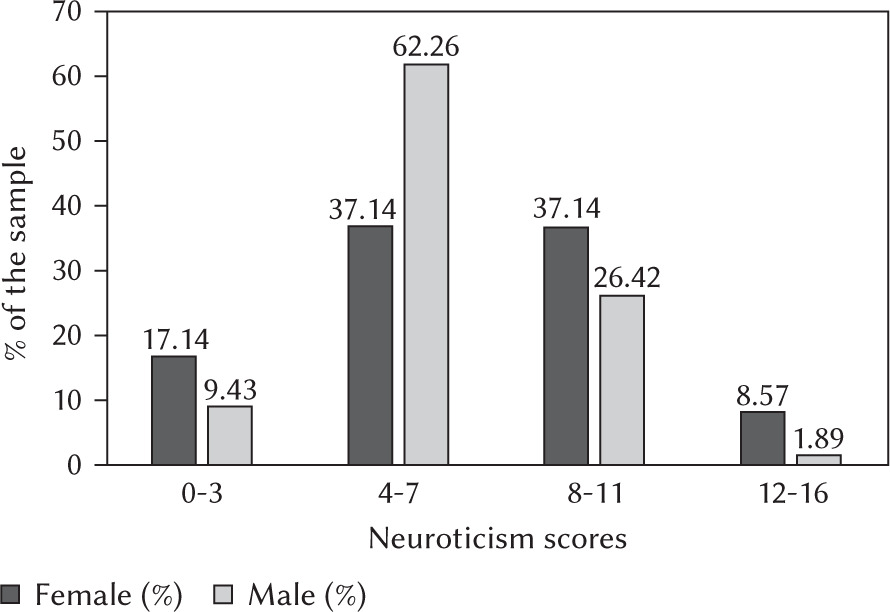
Figure 6
Comparison of conscientiousness scores by gender
Note. Bars represent the percentage of female and male participants within each conscientiousness score range. The score ranges indicate increasing levels of conscientiousness. Data labels show the percentage of individuals in each group.
In contrast, no substantial differences were found in the other personality facets – extraversion, agreeableness, and openness – based on gender.
After analyzing the motivation and personality data across demographic variables, it is relevant to highlight the relationship between participants’ motivation and their personality traits. For this purpose, intrinsic motivation was selected, as a large portion of the sample displayed very high levels of intrinsic motivation. Only participants (n = 37) with extremely high scores (72-84) were included for further comparisons to explore personality characteristics among those who are highly intrinsically motivated in sports.
Participants with high intrinsic motivation tended to score highly in the extraversion domain; about 30 participants obtained medium-high and high scores (8-11, 12-16). Regarding neuroticism, individuals with high intrinsic motivation did not present elevated neuroticism levels: none obtained high scores, and the majority (n = 22) fell within the mid-to-low range (4–7). Notably, the facet of openness showed that highly intrinsically motivated individuals also scored highly in openness to experience; none obtained low scores (0-3), and 29 participants were in the medium-high to high ranges.
Finally, there were no significant differences in the agreeableness and conscientiousness domains by levels of intrinsic motivation.
Concerning personality traits based on weekly physical activity, elevated extraversion levels were found in the group exercising more than 3 hours per week: 44 individuals had high scores in extraversion.
However, in facets such as conscientiousness, Figure 7 shows that scores were more evenly distributed and, unexpectedly, high levels of conscientiousness were not as prevalent among those engaging in extensive physical activity. Specifically, among participants performing more than 3 hours of sport per week, 14 exhibited mid-to-low conscientiousness scores (4-7), 25 displayed mid-to-high scores (8-11), and only 13 attained high scores (12-16).
Figure 7
Levels of conscientiousness among individuals with high physical activity
Note. Bars represent the number of participants performing more than three hours of physical activity per week within each conscientiousness score range. Data labels indicate the count per group.
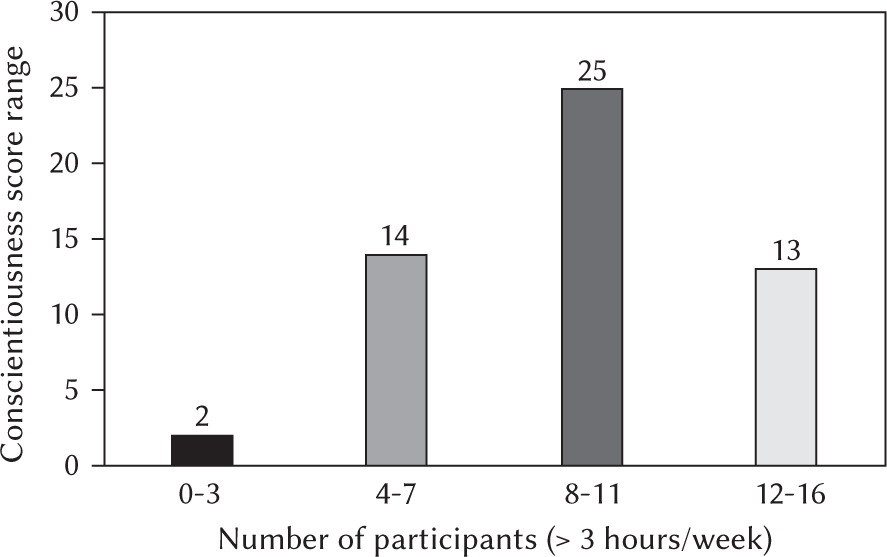
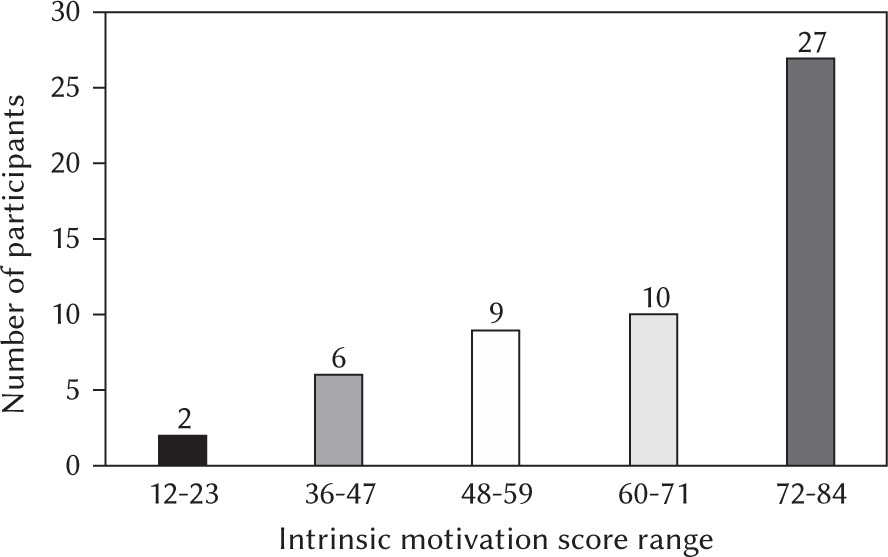
Figure 8
Intrinsic motivation scores among individuals with high physical activity
Note. Bars represent the number of participants performing more than three hours of physical activity per week within each intrinsic motivation score range. Data labels indicate the count per group.
When evaluating neuroticism scores among participants with high levels of physical activity, lower average scores are observed, indicating greater emotional stability. Nevertheless, a range of neuroticism levels remains present: the majority (n = 29) scored in the mid-to-low range (4-7), 16 participants had midto-high scores (8-11), and only 2 showed high neuroticism values (12-16).
Another factor worth analyzing is participants’ motivation in relation to the number of hours they dedicated to physical activity per week, which was directly related to their level of sedentary behavior. Notably, those who exercised more than three hours per week exhibited high levels of intrinsic motivation. As Figure 8 shows, 37 participants achieved scores between 60 and 84 in this dimension. Additionally, low levels of amotivation are observed, with 32 individuals obtaining low scores (5-12). Regarding extrinsic motivation, 25 participants displayed moderate levels (36-60) within this dimension of motivation.
DISCUSSION
The present study analyzed the impact of motivation and personality on adolescents’ participation in physical-sporting activities. Data collected through the personality questionnaire and the sport motivation scale revealed several significant findings.
This decline is closely linked to developmental, social, and educational changes characteristic of this period (Steinberg et al., 2018). In contrast, our sample showed high intrinsic motivation levels, exceeding extrinsic motivation, which nevertheless remains important in promoting sports engagement. Such findings resonate with recent studies emphasizing that interdisciplinary educational programs can effectively enhance intrinsic motivation as well as foster healthy habits among adolescents (San Martín González et al., 2025). This underscores the critical role of motivational orientation and basic psychological needs satisfaction in adolescent sport participation (Gallant et al., 2024; He et al., 2025).
Secondly, dividing the sample into active and sedentary groups revealed that most participants are physically active, engaging in over three hours of weekly sports activity. This contrasts with national statistics that report higher sedentary behavior among Spanish youth (Alimentum, 2011; World Health Organization, 2024). Such elevated activity levels may reflect the positive impact of targeted school and community interventions shown to improve mental health and well-being (Ahmed et al., 2023; de Almeida & Noll, 2024).
Regarding personality traits, our findings align with prior research indicating that athletes generally score higher in extraversion and conscientiousness (García-Naveira & Ruíz-Barquín, 2013; Shuai et al., 2023).
In relation to the association between personality and sports participation, extraversion was positively related to sports engagement, consistent with literature linking this trait to the pursuit of social stimulation and involvement in group activities (Filipiak & Łubianka, 2020).
It is important to emphasize that extraversion and physical activity levels were measured using distinct and validated instruments, thereby ensuring conceptual and measurement independence between the constructs. This approach reduces potential tautological bias and supports the interpretation of the associations as reflecting meaningful relationships rather than measurement artifacts.
However, the considerable variation in conscientiousness scores among active participants and the observed differences in neuroticism diverge somewhat from existing findings, suggesting a complex interplay of personality factors in adolescent athletes (Sañudo et al., 2024). This diversity highlights the need for nuanced approaches that consider the multifaceted nature of personality during adolescence (Patton et al., 2016; Sawyer et al., 2018).
It is important to recognize that motivation and personality, while fundamental, operate within a broader dynamic context that includes social, familial, educational, and cultural influences (Bronfenbrenner, 1979; Lerner, 2006). Adolescents’ developmental trajectories are shaped through ongoing interactions with these contexts, which modulate psychological factors over time (Ryan & Deci, 2017). Therefore, future research would benefit from integrative and longitudinal designs that incorporate the biographical and socio-environmental aspects of adolescence to fully understand the determinants of sustained engagement in sports and overall well-being.
While our study corroborates many established concepts regarding personality and motivation in youth sports, it also reveals discrepancies that call for further detailed, longitudinal investigations (He et al., 2025). These results emphasize the evolving developmental context of adolescence and the importance of tailored interventions to support sustained physical activity and holistic well-being (Hope et al., 2019; United Nations, 2023).
LIMITATIONS
Several limitations of the present study should be acknowledged. First, the potentially limited and non-representative sample size may restrict the generaliz-ability of the results to the broader adolescent population. Thus, while the positive impact of school-based interventions is highlighted in this study, caution should be taken when generalizing these findings to wider adolescent populations with different socio-demographic characteristics. The cross-sectional design prevents observation of the developmental dynamics of the studied variables over time. Additionally, the reliance on self-report measures to assess personality and motivation may introduce biases such as social desirability or misunderstandings due to the participants’ age, which could limit the precision of these measurements. Furthermore, the sample groups were unbalanced with respect to physical activity levels, with 84% classified as active and only 16% as sedentary, which may affect the power and interpretation of group comparisonsThese limitations underscore the need for more detailed future research to expand our understanding of how personality and motivation influence physical activity in young people.
Future studies could focus on extending these findings by exploring how personalized interventions based on personality and motivation can improve long-term sports participation. It would be beneficial to include samples across different age groups to compare personality traits and motivation levels according to age.
Furthermore, studies examining family, school, and community influences on adolescent motivation could provide a more comprehensive understanding of the factors driving sports participation during this life stage. Longitudinal research could also be conducted to evaluate changes in motivation levels over time and their relationship with other health and well-being outcomes during adolescence.
In conclusion, this study makes a significant contribution to our understanding of the psychological factors influencing adolescents’ physical activity. By highlighting the importance of intrinsic motivation and providing a detailed analysis of various personality traits, educators, families, psychologists, and sports professionals can foster more active and fulfilling engagement in sports. This, in turn, will promote healthy lifestyles that may endure throughout life. Therefore, better-informed educational community agents will be better equipped to develop comprehensive school-based educational projects that contribute to achieving Sustainable Development Goals related to well-being and educational improvement.
CONCLUSIONS
The results of this study show that adolescents who engage more frequently in physical-sporting activities exhibit significantly higher levels of sports motivation, particularly intrinsic motivation. This finding contrasts with the commonly reported decline in intrinsic motivation during adolescence (Gnambs & Hanfstingl, 2016; Ryan & Deci, 2020) but aligns with research emphasizing the crucial role of intrinsic motivation in maintaining adherence and commitment to sports (Filipiak & Łubianka, 2020). These results suggest that motivational interventions, both individual and school-based, may improve academic and sports performance and contribute to reducing dropout rates (Lozano Díaz, 2018; Mercader Rubio et al., 2022; Usán et al., 2019).
Regarding gender differences, significant variations were observed in the traits of neuroticism and conscientiousness, with females scoring higher in these dimensions. No significant differences were found in other personality facets. This pattern is consistent with previous findings and offers valuable insight for tailoring sports and educational programs that consider motivational and psychological gender-specific characteristics.
In relation to the association between personality and sports participation, extraversion was positively related to sports engagement, consistent with literature linking this trait to the pursuit of social stimulation and involvement in group activities (Filipiak & Łubianka, 2020). However, no conclusive evidence was found linking neuroticism or conscientiousness with sports practice, highlighting the complexity of the interaction between personality and sports behavior (García-Naveira & Ruíz-Barquín, 2013; Shuai et al., 2023).
Moreover, adolescents with high motivational levels towards sports tend to exhibit elevated extra-version, lower neuroticism, and greater openness to experience, characteristics that, according to various studies, may promote persistence and enjoyment in physical activity (Gallant et al., 2024; Sañudo et al., 2024).
Finally, the findings of this study provide a strong basis for educational institutions to develop pedagogical projects and tutorial action plans aligned with students’ motivational and personality profiles. This facilitates the creation of more personalized interventions that promote well-being and educational quality in line with the Sustainable Development Goals (Hope et al., 2019; United Nations, 2023).